What Makes Conversations Difficult?
- Topic
- Differing perspectives
- Emotions
- Blame/shame
- Defensiveness
- Shutting down
Debate vs. Dialogue
Key Elements of Debate:
- “Might is right”
- Oppositional
- Defensive
- Primary goal is being right and highlighting the flaws in the other’s opinion/argument
Key Elements of Dialogue
- Collaborative
- Exploration
- Reflection & Introspection
- Primary goal is growing together
Skills for Building Dialogue
- Active listening
- Physical attention
- Withhold judgement
- Affirm and Paraphrase
- Clarify
- Reflect emotions
- Share and Encourage a way forward together
- Naming, not blaming
- Naming is making observations about the conversation, using "I" statements to share perspective and experience, and avoiding pointing out what you believe someone else is doing wrong.
- Example: “I want to hit pause and name that I’m noticing some stuff going on for me. This conversation is important to me and I want to make sure I’m present. Can we take five minutes so I can reset?”
- Blaming is often accusatory and where we assert our judgments of situations we are in and/or the people we are with.
- Example: “You’re getting too heated here and you need to take a step back.”
- Accusatory vs. Non-Accusatory Language
- Accusatory - “You” statements
- Non-Accusatory – generalized statements, “I” statements without “you”
- Naming is making observations about the conversation, using "I" statements to share perspective and experience, and avoiding pointing out what you believe someone else is doing wrong.
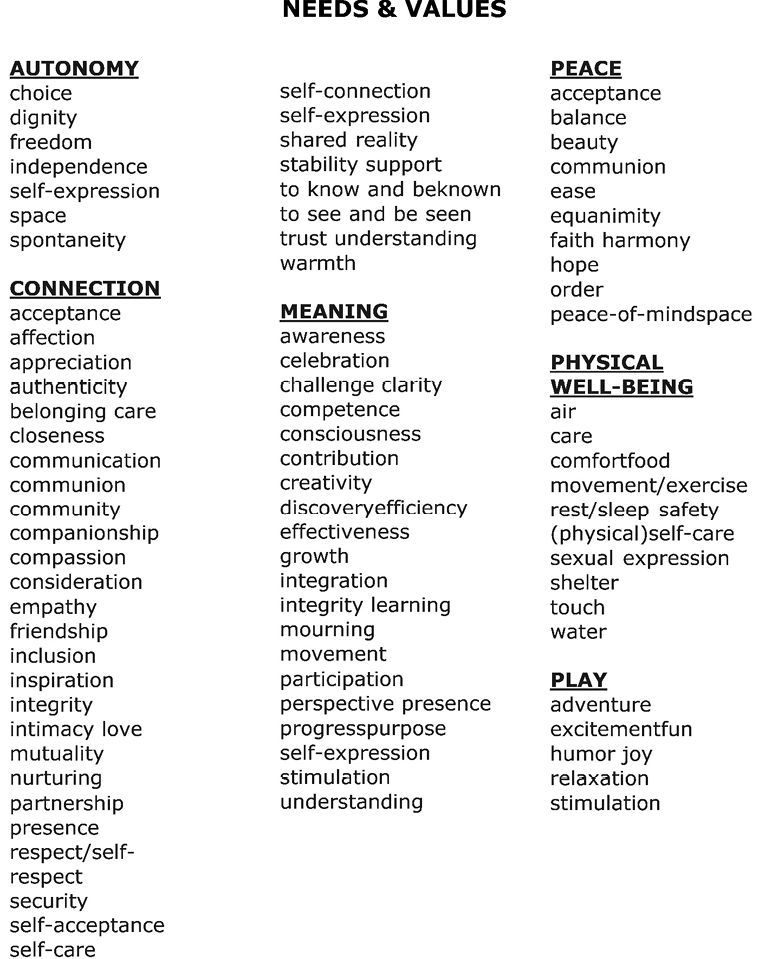
- Value-based communication
- Centering our values in conversations helps us actively listen and de-escalate debate
- Reflecting on our values is key!